This page is Bobby Approved.
[Click here for the Graphics Version of this site]
This is the life was almost lived, and the smile was almost smiled.
This is the heart was almost tamed, but still the heart is wild.
This is the voice was almost heard, and the ears that strain to hear.
These are the eyes that almost see, but know when danger's near.
This is the soul that almost dreams, and the mind that never sleeps.
This is the body that hurts and stings... that stays in bed and weeps.
These are the arms that almost hold, and the lips that almost kiss.
This is the one who never knew, so knew not what to miss.
This is the glass that almost broke, and the milk was almost spilt.
This is the face without a face, and the voice without a lilt.
This is the brain that almost works, and almost has an excuse.
But I can only almost explain, so mostly it's no use.
This is the one who is almost alone, and almost in despair.
This is the scream that's trapped in my head... Aaargh! It's just not fair!
This is the life was almost lived, and the death was almost died.
That is the past I've almost forgotten.
These are the tears I've almost cried.
I am an almost invisible person.
With an almost inaudible voice I speak.
I speak the lies that are almost the truth.
I speak of the days that turn into weeks.
I almost move through the streets and the crowds.
I almost remember the names and the faces.
I'm almost there and almost not.
I'm always trapped in lonely places.
This is the star that almost shines.
This is the lion that almost roars.
This is the wave that almost breaks.
This is the strike that almost scores.
This is the life that's almost wasted.
This is the damn that almost gives.
This is the hope that's almost hopeless.
This is the death that almost lives.
This is almost as good as it gets, and almost as bad as things can be.
This is almost the end of my poem about how I'm almost me.
[Contact the author of this feature]
I wrote this a few weeks after I was first diagnosed. It is about the frustration of not being able to be yourself and of not being able to fulfil your potential, and the horrible moment in your life when you feel yourself ceasing to care about either of these things.
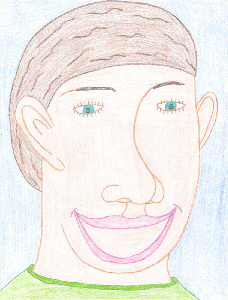
[Click here to open drawing 'It's Happy']
To see more pictures by David you can visit his [website], which includes an extensive [gallery] of his work amongst a great many other interesting things.
Asperger's Poem
Why do I have Asperger's Syndrome?
Is it because I am strong?
Or is it because I am weak and need to gain more strength?
Is it because I am smart?
Or is it because I need to gain more Knowledge?
Who Knows?
Is it because I was a great teacher?
Or is it because I need to teach people in special ways here?
Is it because I was faithful to the will?
Or is it because I need to learn more patience?
God knows why and He will look after me,
Because I am a Prince of Him and He loves me a lot!
Prince David
[Contact David C. Gratiot, the author of this feature]
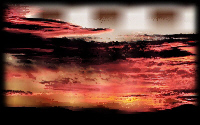
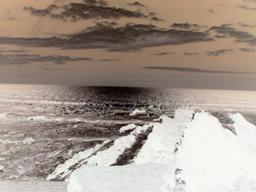
[Click here to open accompanying picture for Dawn of Night]
Combed are the clouds
They streak in shades of purple blue
And beneath, above the trees, a horizon is melting through a blanket of night
Falling is the dirty orange glow of the sun as we turn away
Little waves of cotton wool pull away and float, like some strange migrating animals, across the sky
The faces of street lights beam under their tin hats
The bugs of darkness cold hover beneath the trees, unseen but biting
I fall onto the black green grass so cool, stuck to the earth and spinning
While over a molten sky slips away
A cocktail curtain of fire pulled back to reveal a star studded night
And I will count them
[Contact the author of this feature]
I know it's not very good. I was 14 when I wrote it. The world was still always so beautiful then.
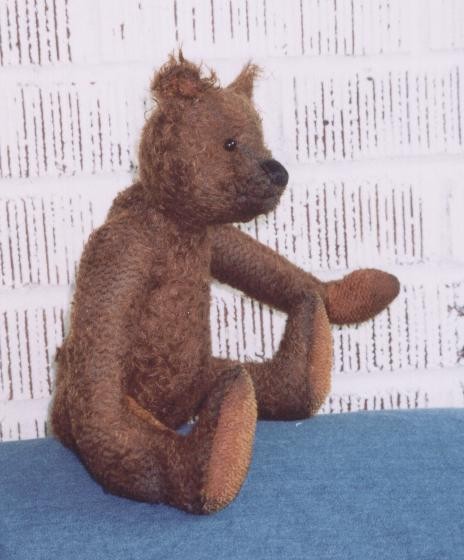
[Click here to open photo of 'Schnitzel' - a Teddy Bear]
Schnitzel is one of the many bears (100+) hand-made by me, Jane Meyerding. He is jointed and has mohair fur. Although making bears is a form of self-therapy for me, the finished bears are my family. I find it much easier, generally speaking, to spend time with non-human animals than with humans, and the bears are the perfect combination (for me) of patient, cheerful, un-intrusive friendliness and a high degree of self-sufficiency. I am autistic and I have written several essays and short pieces about how I experience life. You can read my writing and meet more of my bears on [my web site]. One page on the site is called "Snippets." It gathers together some of the messages I have posted to online groups either of adult autistics or of parents of children diagnosed with Asperger's Syndrome.
[Contact the author of this feature]
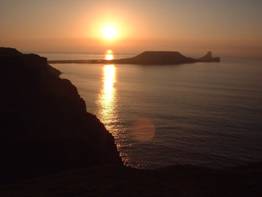
[Click here to open accompanying picture for Buzz]
The white wisps set sail on bath water blue,
And the grand oil paintings they call the trees hover in stillness.
Pink ladies poke the bees with the tips of their folded green parasols,
And a static mind fans itself in the early evening sun.
Lobster pots of slowly dying lavender draw the little black pips of time.
They fly lower than the swallows above, but mostly higher than heads.
We water the weeds as they buzz in silence.
Dry heat wraps itself around me like a blanket.
This is paradise, and nothing can touch me hear save the breeze.
[Contact the author of this feature]
This was one of the first poems I ever wrote... I would have been about 12 or 13 at the time. I was sat in the garden on a hot sunny late Saturday afternoon and I just wanted to capture the experience so it would last forever. Reading it back a lot of my poetry sounds a bit trippy, but I can assure you life is like this for me all the time without the influence of drugs, so I have never seen any point in taking them.
[weave]
I am 45 years old and have always known I was different from most people I meet. I have long been fascinated by the way my brain works but have only recently looked seriously into the neurological causes. If I had to label myself I would say that I am ‘Neurologically Un~Typical’ or ‘Aspie’ although I have had no formal diagnosis. I have two websites although they are really one with two layers. I say that because both really are explorations of my self ~ one through creativity and the other through more conscious thought. In the first layer you will find some of my drawings, photographs & music ~ you won’t find many words & you won’t find great art ~ the pictures are there because they mean something to me. If you want to read something about my recent ‘voyage of discovery’ you should visit layer two. TIM
[Contact the author of this feature]
Autism as a classification did not exist until the middle of the twentieth century, but as far as we know, people with autism have always existed among human populations. We can only speculate upon what our role has been in the history of humanity, but I feel it is a speculation worth making because the past can be the greatest obstacle to the future sometimes.
We know that in the ancient world the vast majority of people were uneducated, but yet there were those who had talents and skills that are now regarded to be lost. For example, in many ancient cultures, reading and writing, even where they existed, were not as favoured as much by the wise as rote memorisation, which for sacred religious reasons could not deviate from the original even by as much as one word. Some of these ancient texts, like the Rig Veda of India, are known to run to hundreds of thousands of words, yet it is common knowledge that they survived in oral form for many, many generations before ever being written down. The ability to memorise like this with ease is one of the savant skills associated with autism, and in societies that valued such things it is not hard to imagine that a person lacking ability in many other respects might be considered special and even holy for possessing such a talent.
In fact, there are many autistic characteristics that are not at all dissimilar to devoted religious lifestyles, for example, seeking solitude, vows of silence, non materialistic values, lack of personal relationships, repetitive chanting, daily following of rituals, as well as the memorisation or careful copying of religious texts. I am not suggesting in any way that all people who lived these lifestyles were autistic, but many autistic people would perhaps have been able to find their niche in society and even be respected and valued for being the people they were, possibly by being drawn to such communities and lifestyles. They may even have originally inspired such behaviours in others.
The historian Horace Dewey proposed that at least some of the holy fools of Russia may have been Autistic. In one case from the sixteenth century a boy who sought to avoid human contact and was put in the care of a local priest after being captured by peasants grew up to be known as the Blessed Simon of Jurev.
In our modern society many people on the autistic spectrum use their talents, skills, and autistic ways of thinking to build careers, disguising or compensating for their difficulties and building on their strengths, often working on the cutting edge of technology. The computer industry in particular is famous for having many people who could be diagnosed on the autistic spectrum. Rates of Autism diagnosis in children are higher in areas where high tech. industries are prevalent and it is thought possible that mildly autistic parents could be passing on their autistic genes.
It is worth considering that this may also have been the case in the past. Autistic traits would have been of great benefit to those involved in architecture, science or invention. You only have to look at the pyramids and other ancient structures to see how a touch of obsession and a good eye for detail would have been pre-requisites for the designers of such things, especially living as they did at a time when there were no computers to help them.
The industrial revolution would also have been fuelled by people with autistic traits. The stereotype of the eccentric inventor or mad scientist has become a bit of a joke, but the characterisation must have come from somewhere. There will always have been men who were totally obsessed with work and had no people skills or social life and only hung on to their jobs and positions by virtue of their talent and intelligence. Unable to care for themselves they would have been looked after by a dutiful wife or house keeper. It is more than likely that many of these people would be classed on the autistic spectrum if they were alive today.
When we examine history we see that many of the worlds most brilliant, original and inventive thinkers demonstrated autistic characteristics and behaviours. Most famously, Albert Einstein, Thomas Edison, Leonardo Da Vinci, Isaac Newton, Alexander Graham Bell, Charles Darwin, and Alan Turing, have all been suggested as being on the spectrum.
It takes little imagination to see how all over the world throughout history many ordinary people on the autistic spectrum would have been leading useful and productive lives, perhaps despite having difficulties and problems related to being autistic. In fact, it is quite clear that social skills, however useful, were not always the high priority that they are today. This puts people on the autistic spectrum at a disadvantage in the modern employment market, but until very recently personality and popularity were not as important as skills, knowledge and even wisdom, in many careers.
For example, it has been suggested that the former US president Thomas Jefferson may have had Asperger's Syndrome, and the question has been thoroughly examined by author Norm Ledgin who believes that is the case. It is impossible to imagine today however that someone who was autistic could ever achieve such high office.
Autistic qualities must have at least something to contribute to success or originality in many fields however, just as much today as they always have done. Many people who have achieved greatness in art, music and philosophy, are described as displaying autistic traits, regardless of whether they may have actually been autistic or not (something that cannot now ever be proved one way or the other). Andy Warhol, Pablo Picasso, Vincent Van Gogh, Wolfgang Amadeus Mozart, Ludwig Van Beethoven, Mark Twain, George Bernard Shaw, Friedrich Nietzsche, Bertrand Russell, Isaac Asimov, John Denver, Alfred Hitchcock, Orson Wells, Jim Henson, Charles Schultz, Andy Kaufman and L.S. Lowry... all extraordinary people who, it has been suggested, may have been on the autistic spectrum.
At the very least we can identify with these people on some level and no doubt they would have been able to identify with us. Not all of them are wonderful role models as such, and certainly not everyone can expect to achieve some of the things they have... it is not about being superior, it is about not being inferior. Being autistic does not make you inferior to other people, even if it feels like it sometimes.
There are of course many people who would not have been able to find a productive role in society, let alone achieve fame or recognition. One in five people on the autistic spectrum has a degree of retardation, and many others would be at least partially disabled by other associated conditions. Many more may have even just lacked education or opportunity.
Some would have been called 'natural fools' or 'idiots' or simply socially ostracised and considered strange or eccentric. Those who were least able may have been taken care of by their families and treated with compassion and tolerance by the community around them, but could also have been abandoned and left to wander the streets in poverty, possibly ending up in jail for doing things they didn't even know were wrong or couldn't help themselves from doing.
Children found abandoned in the wild who, once captured, were subsequently unable to learn to speak fluently or adapt to the ways of society, (such as the wild boy of Averynon from the 1790's or Genie from the late 20th century), may have had the difficulty they did because of being autistic. In fact that may have been why they were abandoned in the first place.
Some would have been presumed mad and locked away, hidden from view by those who were ashamed of them or feared them. Even in our so called civilised society of today autistic people have far from escaped this type of treatment. The misdiagnosis of schizophrenia has been common for the last hundred years and is still sadly happening today.
Also, studies of patients in the high security hospitals Broadmoor, Rampton, and Ashworth found that up to 5.3% of the inmates had an autism like disorder, more than five times higher than the occurrence among the rest of the population. It is very unlikely that autistic people are more criminal or violent than the neurotypical, so something must be going very wrong somewhere for these people.
Women with Autism should also not be forgotten. Women are outnumbered 4 to 1 by men in the autistic community and are often presumed not to exist. Life would have been particularly difficult for women with autism in the past. For a start, it would not matter how intelligent a woman was, she would have been unable to develop a career or even show an interest in anything other than domestic and social duties. If such rules and expectations were not respected then a woman could easily have been ostracised, presumed mad or sick, thought to be evil or a witch, or just beaten into trained obedience and submission. Some may still be going through similar experiences today, though thankfully there is much greater equality between the sexes than there used to be. We are not without our role models from history however... The novelist Jane Austen, the poet Emily Dickenson, and the scientist Marie Curie, are all suspected as having been on the autistic spectrum.
Autism was first described by Leo Kanner in 1943, using case material from his clinic at Johns Hopkins University, Baltimore, USA. The children he studied had no real communication or language, performed repetitive tasks and disliked change. A year later in 1944, Hans Asperger, a paediatrician from Vienna, published a paper based on studies he had been doing at around the same time. The children he saw were capable of language and sometimes showed high intelligence, but at the same time did not participate in peer group activities and were likely to be teased or bullied. They seemed somehow detached from the world around them and some of them had undesirable habits. By coincidence he also used the word autistic to describe the children he saw, however, because his work was published in German it was largely ignored, appearing as it did at the end of the second world war.
Meanwhile, Kanner's Autism went on to become more widely known but until recent years was still largely misunderstood.
For a long time, people thought that the children Kanner had labelled were like this because they were deprived of social and emotional contact or had a neglectful mother who lacked warmth (one of the terms used was 'refrigerator mother'). It was thought that with therapy they could be reached and become healthy well adjusted children just like any others. It was not until the 50's and 60's that it was finally seen as having a neurological basis, at first thought to be the result of brain damage.
Approximately 75% of those with Kanner's autism are retarded (that is having an IQ less than 70), and because of this there are still many people who think that autism is just a type of retardation.
In the 1970's Lorna Wing, a London based epidemiologist observed how autistic traits could occur in varying degrees of severity, and saw a similarity to the symptoms described by Hans Asperger back in the 1940's. Her findings led to the notion of the autistic spectrum.
There could be as many as 60 Million people on the autistic spectrum worldwide, 48 million or so of which would have average or above average intelligence.
In 1981 her findings were published in the journal of Psychological Medicine, and the 'syndrome' named after the Austrian doctor was born. Asperger's Syndrome didn't officially appear in the Diagnostic and Statistical Manual of Mental Disorders until 1994.
Gradually, over the course of the last twenty years, thanks to the media and the internet, public awareness of autism has increased a great deal, and not only are parents, teachers, and medical practitioners more aware of what to look for, many adults who have lived their whole lives without explanation for their differences are now coming forward for formal diagnosis or even just diagnosing themselves.
There is strong motivation to embrace the medical label. The alternatives are usually much worse... things like 'nerd', 'geek', 'anti-social', 'rude', 'loner', 'weirdo', 'miserable', or 'fool'.
So, on the one hand the medical label recognises people's differences and needs and is filled with the promise of one day allowing us to be accepted by society, understood and appreciated for the neurodiversity we bring. On the other hand though the medical label begs for a cure...
There has been an explosion in the number of children being diagnosed with a degree of autism over the past ten years and there is much controversy as to what is causing it. Some say it is the widening of the diagnostic criteria coupled with increased awareness, while others think it is caused by environmental factors or vaccines such as MMR.
It could also be a cultural change... during the last two decades the demands of education and employment have changed quite radically. Now more than ever good social skills, conformity, and flexibility, give you a real edge in what is becoming an increasingly bland, shallow and competitive society. Parents and teachers need to identify possible problems so they can be corrected or compensated for. No one wants to see their children disadvantaged and there is an obsession with achieving the current concept of success. Is it any wonder that children are rushed to the doctors at the first sign they might not be what their parents and teachers want them to be?
As you would expect, there is an army of parents that is quite vocal about asking for a cure. Naturally, they want their children to be like other children and to fit into society, and, with the best of intentions, the medical profession is more than happy to oblige them. Sadly this attitude is quite misguided.
Autism is not a disease. There is no evidence that an autistic mind is an unhealthy mind. If you consider the whole of the autistic spectrum then only about 1 in 5 cases or less involves retardation, and the other four will mostly be of average or quite often above average IQ. Pre-disposition toward secondary conditions should not be taken into consideration as they can be treated quite independently of the autism itself.
Autism is not something you have, it is something you are. You cannot remove the autism without destroying the person. This is what is so disturbing about drug therapies and behavioural programmes. They are largely about trying to force someone into being something they are not. Education and therapy can be kind and helpful, but training and adjustment are just a step too far in the opinion of many.
The most disturbing trend though has come since the quite recent recognition that autism is most probably genetic. Family and twin studies have been very suggestive, and most research is aimed at establishing which combinations of genes make the difference. In the near future it will most likely be possible to alter these genes so that autism does not occur. This of course is more like eugenics than medical treatment.
It is also quite reasonable to assume that as soon as they can test for autism prior to birth parents will be encouraged to abort those children, like they currently are with some other conditions. Apart from essentially being genocide, and apart from implying that people don't deserve to live if they might be retarded or a burden to care for, it is also a seriously flawed policy as it takes no account of the inability to measure potential or of the need to maintain a diverse gene pool.
It is quite a disturbing thought that the next Einstein could be aborted before ever getting a chance at life because he or she is potentially autistic. It is quite clear that the world needs neurodiversity and should be celebrating and nurturing it instead of trying to destroy it.
In conclusion, it is clear that the last sixty years have been a revolution for autistic people. On the one hand the world has improved for us in the same way as it has for many people... there is an increased understanding of the human brain and more in the way of support and equal rights for people who are effectively disabled. Technology has also had a part to play, not only providing work and entertainment, but also building a community... the internet has been a life line for thousands.
On the other hand however, the price we pay for support and tolerance is to be pitied and made to feel we should be trying to change and fit in. Also, despite being people who clearly have something to offer, the system of education and employment excludes us more and more everyday, as by it's very nature it makes demands many of us find it hard to meet.
Ultimately however, I remain hopeful for the future. For the first time now in history we have something we have never had before... we more or less know who and what we are.
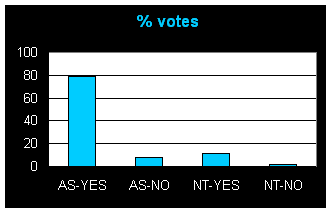
I recently asked visitors to this site the following question... In your considered opinion, presuming the human race still exists and hasn't been wiped out by war, plague or meteor impact, Will there still be autistic people in the world 300 years from now?
This is how they have answered...
Hardly any neurotypical people have voted. This could possibly be because neurotypical people are unlikely to feel as strongly about this subject as autistic people, or even that less neurotypical people actually visit the site. All the same, it looks like bad news for organisation such as Cure Autism Now.
What we can see clearly is that the vast majority of autistic people who voted want to believe that there will still be autistic people in the world of the future.
The Stagnant Gene Pool
Eventually they will be able to test for autism before birth, and no doubt parents will be encouraged to terminate those pregnancies, as they currently are for a vast number of other conditions already detectable prior to birth. Many families with autistic genes are already discouraged from having children by doctors. In some countries this type of attitude could even ultimately result in forced sterilisation. It is questionable whether or not they could wipe out autistic traits all together, being as they are so subtle and complicated, but there is no doubt that they want to and are willing to try.
I think this would be a tragedy, not just on moral and ethical grounds, but because the human gene pool thrives on diversity of all types. I think the scientific and philosophical arguments for using genetics to 'cure' autism are pretty shaky in fact, but more than this I think there would be a real human cost. I really do believe that we have a lot to offer to the future of our species...
Technological Evolution
The world of the future is our world... it belongs as much to us as to anybody. It is likely that aspies contributed more than their fair share to the industrial and technological revolution of the last few centuries. Many of us are naturally talented and gifted in this area. In many ways the world already needs more people like us, not less.
If we are disabled, then the computer could be our wheelchair or our Braille or our sign language. It opens up doors to communication and interaction for people with AS, as well as being a potential hobby or even career. If the world of the future is a world dominated by computers then it is a world in which we will be less disabled then we have ever been, in fact we may even become some of the most able in society.
Creative Vision
When we look at the world we commonly draw understanding from it that other people seem not to, and we are much less influenced by fashion and convention. We are much more often capable of something which is much rarer among the neurotypical community... truly original thoughts and ideas. Our distractions are fewer and our perseverance is a rare gift... There are no short cuts to perfection.
We do not all have to be great artistic, musical, or mathematical savants to contribute to creative originality in the world, because by our very existence... appreciating the original and different, saying odd or inspired things that provoke thought in others, sharing our unique experiences and observations... by our very existence we are contributing, in ways both big and small.
Right Planet Syndrome
Sometimes it feels to us like we are on the wrong planet, but we aren't. We are meant to be here. We are part of nature like anyone else. Arrogance and prejudice blind people to what we have to offer. They focus only on our limitations and the ways in which we inconvenience and annoy them, often neglecting to appreciate the extent to which they inconvenience and annoy us. Despite this though, I believe we will play our part if we are just given a chance.
I can imagine Aspies in space in the future, proud to be who we are... possibly directly contributing to progress and innovation... solving the insolvable and imagining the unimaginable... looking back at the earth and not thinking of ourselves as outcasts and aliens anymore, but instead seeing our home.
Can't get there from here...
We are at a fork in the road. Attitudes toward autism today will decide if we will still be here in the world of tomorrow.
I do not believe that Asperger's syndrome is just eccentricity or personality and I do not believe that it is a disease. I am not in a position to be absolutely certain, but as best as I can tell we are just a different type of people with different types of brain function. We are in a minority, and the disability we experience in society is very, very, real, but not inevitable.
Every time we make an effort to fit in with neurotypical society they move the goal posts... Logically speaking there is no motivation for us to make an effort to fit in and be productive. It's like a Chinese finger trap... the harder you try to escape the more stuck you get... The more you 'appear' to be coping the less help and support you get.
Despite this we struggle on, because we are not deliberately trying to be difficult and awkward. Many of us try harder than most to fit in and live up to people's expectations. If we could be ourselves all the time I'm sure we could achieve a lot more.
I believe the future involves compromise. We in the autistic community have already compromised ourselves more than enough... it is time the neurotypical community made the effort to meet us half way.
I'm not sure if train spotters should be offended at all being labelled Aspies or if Aspies should be offended at all being labelled as train spotters...
Anyone can have a hobby or interest they are obsessed with or talk about all the time, and most of the time they would not be considered abnormal for it. What makes Aspies different?
Firstly it is the subject matter. Neurotypical interests tend to fall into one of five categories, all of which come down to getting some social advantage or recognition.
People e.g. gossip, celebrities, kids, etc.
Status e.g. fashion, cars, holidays, etc.
Purpose e.g. work, politics, religion, etc.
Competition e.g. sports, gambling, contests etc.
Art e.g. music, photography, theatre, etc.
Aspies can be interested in these things, but can just as easily be drawn to things which are less usual and from the neurotypical perspective seem to have no purpose e.g. collecting pictures of telegraph poles and cataloguing them.
The other key difference is the degree of involvement with the interest. To get involved with something so much that you may forget to eat or not notice how much time has even passed is called perseverance. Aspies can tend to be like this once they get involved in something and can often be reluctant to leave off what they are doing for anything else.
Aspies are described as talking about interests too much as well, and this is for two reasons... You are so interested in something you can't think about anything else and you are generally bad at knowing what to talk about anyway. and you can't tell that other people are bored or not interested because of problems reading non-verbal signals.
While some interests can be lifelong, it is quite common for Aspies to drop interests as suddenly as they picked them up, sometimes never to go back to them and other times picking them up again at a later date.
It is this combination of unusual subject matter, perseverance coupled with lack of long term commitment, and the manner of talking about things, which makes the interests different.
A savant skill is an extraordinary skill that is not learned.
Approx. 10% of autistic people possess some degree of savant skill.
The most common savant skills involve mathematical calculations, memory feats, artistic abilities, and musical abilities.
It is not known what brings about savantism, but it has been speculated that it comes from extraordinary powers of concentration. The professor of Psychology at Flinders University in southern Australia, Robyn Young, found that temporarily disabling language and social skills by applying strong magnetic pulses caused some volunteers to display savant abilities. As savant abilities tend to be related to the five primary senses (visual, auditory, olfactory, tactile, and taste), it can also be hypothesized that these skills come from the right hemisphere of the brain at the expense of the communication skills of the left hemisphere.
It has even been suggested that as babies, all humans possess savant abilities, as can be seen in the rapid language acquisition at that age as well as the fact that absolute pitch and eidetic memory are much more present in children. Corresponding image studies, which show that newborns are neurologically limited to parts of the brain that eventually become a part of the unconscious, support this idea as well. The theory is further supported by the fact that autistic children often lose their abilities once their social interactions improve, much as neurotypical children's early savant like skills deteriorate once they obtain a strong command of language.
Savant skills certainly have a lot to teach us about the human mind... It's potential and how it works.
Historically, children were raised by their parents, elders and older siblings. The invention of school essentially leads to the raising of children by their peers with minimal supervising by teachers. For children with Asperger's syndrome attending school can be more or less like being thrown to the lions.
Following are some of the pros and cons of various educational options.
MAINSTREAM SCHOOL
Not always possible to receive extra attention.
Behaviour could be disruptive.
Bullying.
Misunderstandings by teachers and pupils.
Learning style / needs not accommodated.
Some opportunity to fulfil potential.
Valuable experience of social world.
SPECIAL NEEDS CLASS / SCHOOL
Aimed at lower functioning pupils.
Bullying.
AUTISM SPECIALIST SCHOOL
HOME SCHOOLING
None of the options are perfect.
Being realistic, I would imagine that the best compromise is to attend mainstream school and classes but have extra support, tuition, and counselling from some kind of mentor. I don't know if this kind of set up exists anywhere already, or even how feasible it is. It goes without saying of course that mainstream teachers also need to be more aware of autism spectrum disorders and the sensory, behavioural and learning differences Aspies have. Also, other pupils should be educated in the value of neurodiversity the same way as they are told not be to discriminatory against other minorities.
In my opinion, education is the highest priority in the life if a child with AS and far more important than any treatment and therapy to alter their behaviour. If a child is allowed to develop their interests, is educated in a way that allows for their own style of learning and communicating, and is not turned off education for life by bullying and cruelty from teachers and pupils, then they have as good as good a chance as anybody, if not better, of going on to higher education, and perhaps finding an interesting and rewarding career.
People with Asperger's Syndrome score average or above average I.Q.
Only 1 in 5 people on the spectrum has an IQ of below 70. The other 4 out of the 5 have IQ varying from the average to the well above average.
Intelligence is very hard to define and is generally accepted to take many forms. I.Q. stands for intelligence quotient. It is measured using I.Q. tests, which themselves can take many forms. Most standard I.Q. tests will look at vocabulary, numeracy, logic, and the ability to solve puzzles, but there are also specialised tests that focus on just one style of question or skill.
The average I.Q. test score is 100, and 75% of people score between 90 and 110. 1 in 50 people have an I.Q. in the top 2% (the top 2% varies from test to test but is around 130-140 or above), which is what you need to join MENSA.
For people with some autistic spectrum disorders low I.Q. test scores may be because of lack of cooperation rather than lack of intelligence, but I.Q. tests do not seem to work on people with Asperger's very well either, even though we can usually sit down and do them easily enough, but I suppose that is not at all surprising...
Why should a test designed for people of one particular style of thinking and brain functioning tell you anything at all about people whose brains and thinking style are totally different! I'm not even sure I.Q. tests tell us much about the potential of neurotypical people let alone autistic people. I don't know about anyone else, but that seems quite obvious to me. It is like measuring the physical fitness of a fish by seeing how fast it can run.
No wonder then, our scores can be very uneven. I have done many I.Q. tests throughout my life. I have scored as low as 116 but my average score is 155. I get very different types of scores on different types of tests. Sometimes I can fall down on something as simple as misunderstanding what I am being asked... my answer will be correct but it will be the wrong correct answer.
I.Q. is going out of fashion anyway. E.Q. - Emotional intelligence - is all the rage and the new indicator of personal success. It is social skills and people skills and all the things we Aspies can be proven to lack. I guess that classifies us as emotionally retarded, though personally I don't believe for one second that is true.
I think what is clear is that the autistic mind challenges conventional views of what intelligence is.
Do we work or don't we?
On the one hand, most aspies are physically and mentally capable of working, but on the other hand this is not always enough. Many things stand in the way of satisfying and successful employment.
Employment Culture
If the time I have spent job hunting has taught me anything it is that many jobs will ask for any or all of the following three things...
Excellent interpersonal / communication skills.
The ability to handle stress and work under pressure.
A flexible and adaptable attitude.
The very nature of Asperger's Syndrome is that these things can be difficult to deliver under certain circumstances. Of course, everyone is an individual, and some are more capable at coping with these demands than others.
Other little things like compromising quality for quantity, taking criticism without getting upset, and having to do things the way your boss wants, even though it is not as good as your own way, just to protect their ego, could be tricky areas as well.
Selling Yourself
Applying for a job is a ritual. Success depends on a knowledge of the unwritten social rules of the process, right from responding to an advert or writing a CV or letter, to filling in an application form or doing an interview. Giving the right answers the right way, getting your body language right... it sounds so simple, but it is not. It can be learnt, but applying that knowledge can still be a hit and miss procedure. This is an area where most people with AS would benefit form information and support, but most of all employers themselves need to be educated to see our potential beyond the superficiality of the interview procedure. after all, they should be awarding people jobs based on skill and merit, not awarding people Oscars for best performance under intense scrutiny and pressure.
Disclosure
It is against the law for people to be discriminated against because of a disability in the UK, but discrimination can be difficult to prove. You do not have to disclose, but then if you later request changes be made to accommodate your needs it can be very difficult. If you feel that you are being turned down for jobs because of the problems you are encountering as an Aspie then you could contact the NAS for advice and information on how to raise the subject with an employer and how best to explain it.
The sad thing is that telling people you have AS lowers their expectations of you, which has obvious advantages, but also has the potential to hold you back in some circumstances.
Sensory Problems
Many working environments are not suitable for people who have sensory integration problems. Nothing out of the ordinary... bright lights in offices or shops, the noise of machinery or people... things that you find anywhere and are difficult to avoid.
Before I knew about this I never used to know what caused the overload I used to experience. Once when I was working in a busy shop at Christmas I became very overloaded and couldn't even move or speak. My boss thought I was drunk and wouldn't believe me afterwards that I hadn't been drinking alcohol. I had no way to explain why I had got that way. I had no way of knowing it would happen. The blasting music, flashing lights, pushing my way through noisy crowds of people all shouting for my attention... I did not know back then that I was less able to handle that than other people. Also, I once had a job in the textiles department of another shop and I would have to get fabric off roles in the warehouse sometimes. The fabric used to smell very musty... I found it overpowering like it was going to make me vomit. No one else could even detect the smell. They all thought I was making it up and trying to get out of doing the work.
Communication
Many jobs involve effectively communicating with both colleagues and customers.
It is tempting to assume that jobs that involve contact with the public are less suitable for Aspies, but this is not necessarily the case. I personally found that the brief, structured encounters I had serving customers in shops were helpful in terms of me learning better how to act around people, and it was an experience that boosted my confidence. At first I felt thrown in at the deep end, and different people react differently to that, but in my case I adapted very quickly to survive. I can cope with short bursts of communication in a professional context deceptively well now. It is still stressful though.
There are some types of communication for which we are better suited... following rules, being accurate, being knowledgeable about your subject matter, your face and voice not betraying your emotions, but these are only useful in a professional context not in a social one.
Social communication can be, as you would expect, a big obstacle at work...coping with social bonding rituals like sarcastic banter and teasing, the need to network and develop rapport with colleagues, the pressure to perform well and impress at out of work social activities, handling bullies and exploiters, projecting an image of competence and intelligence when all other people see is some weird neurotic geek... It is all about communication, and perhaps more importantly about not misunderstanding or being misunderstood. It is not possible to overstate how difficult all this can be to handle when you are AS. It's like doing the same job as the person next to you but blindfolded with an invisible blindfold and with your hands tied behind your back with invisible rope.
In conclusion, the ideal is that all aspies could be self sufficient and live independent lives supporting themselves with suitable and satisfying employment. The reality is that a lot more needs to be done before that is an achievable goal for many.
We have many strengths, talents and attributes. There are aspies who hold down good jobs and enjoy their work. Some of us though still need help to sell ourselves, assistance in finding a suitable place to work, and understanding from those we work with, that we do not currently have.
I'd like to end this section with the flowing blooper from my early employment history... a good example of what not to say to your new boss I think...
Manager : Sow, how are you settling in? Is everything going OK?
Me: Yes, everything's fine. I'm really enjoying it.
Manager : Good. That's what I like to hear.
Me : I know. That's why I said it.
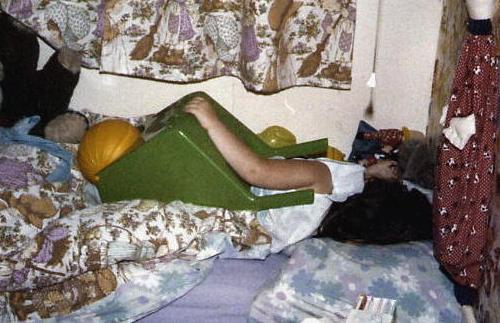
[Click here to open wheelbarrow photo]
I have always loved the touch and smell of new plastic.
When I was a 5 years old I fell in love with this chunky moulded plastic wheel barrow in Mothercare. I felt I couldn't live the rest of my life without it. I don't think I have ever wanted anything so much before or since. I was so pleased my mum got it for me. I cuddled it in bed at night after I got it so I could feel it's smoothness and breath in it's delicious new plastic smell.
Copyright © 2024 by S. Shaw askwhatever.co.uk All rights reserved.